
Enable Mobile View

Sustainable Home Improvements Before Selling

Sustainable Granite Countertops

With sustainable home improvements, it’s hard to decide what to do before selling a home. Many home buyers are enticed by the idea of sustainability.  Moreover, home improvements that address concerns about energy savings and efficiency can give your home a huge boost in value. But what’s going to give you the most return on investment (ROI), while addressing concerns on sustainability? Here are a few ideas to consider before selling your home.

Energy Efficient Upgrades

This is one of the easiest ways to help make your home more sustainable!   There are ways to get reimbursements on your improvements if you live in the state of Maine. This includes improvements on boilers, heat pumps, water heaters, insulation, and more. Updating to Energy Star appliances like fridges and ovens also help save money over time with bills. Let your Real Estate Agent know if you have made these upgrades to explain the value to potential buyers.

Low Flow Plumbing

Another easy way to improve value and sustainability in your home is changing out those plumbing fixtures. You can find options that include this like toilets, faucets, shower heads, washing machines, dishwashers, and more. Making these improvements will help improve on water usage significantly without necessarily breaking your budget. Your Real Estate Agent can go over these features with potential buyers during an open house or home visit.

Durable Finishes

Hardwood flooring is one of the few high value home improvement items that can give you a huge ROI. Compared to products like carpet or vinyl, homeowners find that hardwood floors are easy to clean and durable. Plus they look amazing! This is also something to consider when you think about your kitchen countertops. Compared to laminate, natural or composite stone (ie granite, quartz, sintered stone) last longer, which means higher ROI. Even wooden countertops can make a huge improvement on ROI, but keep in mind they require extra maintenance. The visual impact when your Real Estate Agent takes pictures for your property will help bring buyers in!

Sustainable Windows/Lead Abatement

Redoing all of your windows to more energy efficient varieties can improve energy bills over time.  However,  ROI is fairly low if the existing windows are in decent shape.  You should replace your windows if they are severely damaged, ill-fitting, or rotting wood. In addition, if your home is older than 1978, you should test your windows for lead paint before making improvements. Talk to your Real Estate Agent about going through the lead abatement program, as well as hiring a lead-safe certified contractor.  Doing this can help you open up your potential buyers to include families with children.  Avoid selling your home at a lower price to compensate for the repairs needed to address lead paint issues.

Solar Panels

While solar panels save a significant amount of money per year on electricity usage, the initial installation is expensive. Some companies offer leasing programs which can help you save up front.  However, you may run into problems when trying to sell your home. Thankfully there are tax credits that you can get if you do decide to install your own solar panels. In this case, the ROI as far as home value is more dependent on two things:

  1. How long you plan to live in the home after the installation to reap the energy savings
  2. The home buyer’s market in your local area

Talk to your local Real Estate Agent on the desirability for solar panel improvements in your region.


Thinking about selling your home and want to know the best improvements to make? Reach out to us at The Real Estate Store to get started!

Want to keep updated on local real estate listings, stories, and tips?  Follow us on Facebook or Instagram!

Posted in For Sellers, Uncategorized Tagged with: , , , , , , , , , ,

Short-Term Rentals as Investment Properties

Short-term rentals are an up-and-coming way for travelers to stay in places that are not the conventional hotel or resort. For a generation looking for “authentic experiences,” it’s a fun and exciting market to tap into.  However, there are many things to consider before you start your own short-term rental:

Location

You want to make sure your investment is in a convenient and desirable place. Find properties that are near major attractions, large cities, or features like beaches and mountains. Moreover, consider the distance to the nearest airport, mass transport, or highway. Remote locations are great for allowing guests to feel far away from their busy lives, but they must be easy to navigate to with GPS or simple directions. Also, be aware that some towns/cities have restrictions on short-term rentals. You need an experienced Real Estate Agent who is familiar with the local ordinances to ensure that short-term rentals are allowed.

Climate and Seasons

Living in Maine, all of us are very familiar with how changes in season affect tourism. We tend to see an influx of people in the summer and much less in the winter.  However, there are still ways to benefit from this! With a short-term rental property, you have the flexibility to adjust pricing of your rental more often. Price adjustments can help entice vacationers during less profitable times or make the most of popular months. Beach properties, for example, should have their rates adjusted for the summer months.  Near skiing areas, short-term rentals will want to capitalize on winter months and holidays.

Building/Property Upgrades

What kinds of guests are going to be attracted to your property?  You want to keep these things in mind when thinking about making sensible renovations.  Do you have a five bedroom chalet in the mountains, but only one bathroom?  Adding another bathroom is definitely worth considering for hosting large groups/families.  Do you have a cozy cape with easy access to the water?  Adding a deck or landscaping is an easy way to create that “picture perfect” moment for your guest.  Your local Real Estate Agent can help you see the potential in an investment property!

Hospitality

With a short-term rental, there is often an added expectation of being a host in addition to being a landlord. On the one hand, you get to meet new people and help provide wonderful memories for you and your guests – doing things like keeping guests informed, anticipating their needs, and helping them discover the area can boost their overall experience of their trip. On the other hand, some owners may prefer a more “hands off” approach to their investment property.  If that is the case, you may want to find/hire someone who can help act as a host and manage your property during your guests’ stay.

Guest and Host Reviews

In the advent of technology, websites and smartphone apps are making it easier for vacationers to connect with short-term rental properties. Many of these apps allow users to leave reviews, which means positive experiences can help! The higher their ratings, the more likely you are going to have consistent bookings. In addition, some of these apps also allow other hosts to leave reviews about former guests as well. Have a guest that damages your property, leaves a mess, or caused issues? Or have a guest that left your place clean and respected you and your property? You can leave that information in your reviews which can inform other hosts about their potential guests.

Property Management

Whether running a long-term or short-term rental, owners can utilize property management companies to take care of issues that may come up. However, there are times when it will be unavoidable for an owner to be personally involved. Along with normal maintenance that comes with owning a property, cleaning between guests can be tricky to manage. If you decide to rely on a management company, its best to check online reviews and personal references to find the right fit for you.

Short-Term Rentals & Engagement

Overall, short-term rentals require extensive personal engagement in order to be successful. In comparison to a long-term rental, you need to invest more time into your property and your guests. However, the financial gains are much higher.  The more time you put into building your business, the more rewards you will gain from it!

Thinking about purchasing an investment property as either a long-term rental or an short-term rental property? Reach out to us at The Real Estate Store to get started!

Want to keep updated on local real estate listings, stories, and tips?  Follow us on Facebook or Instagram!

Posted in For Buyers Tagged with: , , , ,

The New England Home: Cape Cod Style

Looking along any coastline in New England, you can find a soft rainbow of steep sloped roofs and weathered cladding. These simple box structures inspire an elegant, modest look of the historic colonial-style homes.  Moreover, they sprouted up to combat the harsh storms of the Atlantic for the new pioneers of the New England area. How did it become a prominent style home of throughout the United States?  Today, we’ll take a look at the history of this style.

Pioneering Origins

The style originated from the Georgian Colonial of Great Britain that Puritans replicated in the New England area. The harsh climate on the coast proved treacherous for these types of homes so ingenuity came into play.  The settlers redesigned the homes into low, steep roofed cottages that would allow heavy snow to slide off. A central chimney warmed the entire home, which is why the ceilings were lower.  Shutters protected the windows from being battered by storms.

Settlers covered the typical Cape Cod style home of the time in wide, wooden clapboards or shingles.  The cladding then weathered to the distinctive gray that these style homes are often thought of.  These Cape homes had two distinctive symmetrical front windows on either side of the front door, no dormers, and almost no exterior ornamentation.

Colonial Revival

In the 1930s to 1950s, historic attractions such as Colonial Willaimsburg emerged.  They renewed an interest in the essence of the colonial style that developed in America in the 17th century. 

Royal Barry Wills, born in Massachusetts, was one of the more popular architects of the Colonial Revival.  He brought a modernized Cape Cod-style home to middle-class families at the time. Wills created features within the style for larger and expanding families, and incorporated garages into the design. Hence, he focused on accommodating the typical middle-class family, while keeping that New England “charm” to the home. Because of this, Wills brought this style back into popular architecture throughout the United States and Canada.

Present Day Cape

The Cape Cod Style is still a common colonial-style home in New England to this day. These homes are practical for brutal winters and Nor’easters.  In addition, they remind us of a time and place early in the history of the United States.

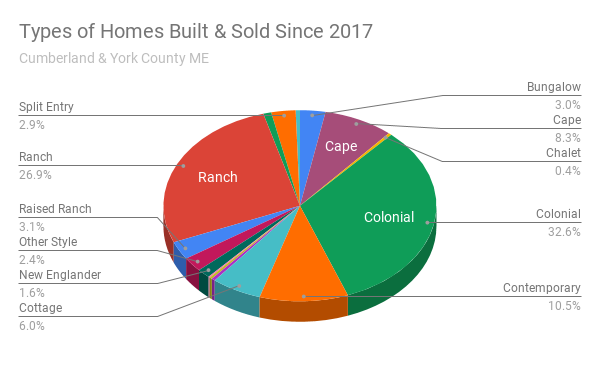
Types of Homes Built & Sold Since 2017 - Cape

In this region, Colonial homes are still being built and sold, surpassing the popular Ranch and Contemporary type homes. Furthermore, Cape-Style homes takes the fourth highest type of home built and sold since 2017. Their elegant charm and modest shape helped form the look for the classic New England home.  Therefore, they remain a common fixture even today along the northern Atlantic coast of the United States.

Interested in finding your dream home? Reach out to us at The Real Estate Store to find out more!

Want to keep updated on local real estate listings, stories, and tips?  Follow us on Facebook or Instagram!

Posted in Uncategorized Tagged with: , , , , , , ,

7 Tips to Scoping Out a New Neighborhood Before Buying

Planning on moving to a new neighborhood? Many times when people start the moving process, we tend to focus on making sure the property is going to meet our needs. Beyond the property lines, however, knowing your neighborhood can really help you make sure your home is going to be the best fit in the long term. Here are a few tips to find out a little more about the area before you buy:

1. Take some time to do some online research about the neighborhood.

First of all, the internet is a valuable resource!  It can provide a wealth of information about the neighborhood you are planning to move into. Typing in the neighborhood name into search engine helps paint a picture of what that neighborhood is known for. Real estate listing websites often have tools that can help you get a locals perspective on how they feel about their neighborhood. You may even be able to find message boards or community center websites that can tell you about the community services that are provided for the neighborhood.

2. Read the local newspaper.

Are you having trouble finding information online? In smaller and more rural areas, you may have better luck going to a local store and picking up the newspaper for a few weeks. Similarly, you can also take the opportunity to look at any local bulletins that you find in the area. What services locals are providing or information that they are posting on those bulletin boards can give you a bigger picture of what the neighborhood is like.

3. Meet the neighbors!

This doesn’t mean that you should walk up to a neighbor’s home and just knock on the door!  An easier, and less intrusive method, is to go to a nearby park or community center and meeting locals there. Likewise, you can just head into the local cafe, restaurant, or grocery store and talk to someone at the counter.  It’s a really great way to learn a little bit more about the area.

4. Research local businesses and attractions nearby.

Different types of businesses can either be a draw or a deterrent to a potential buyer. For example, having a local bar within walking distance could be great for an individual who enjoys the relaxing and socializing after work;  however, it may not be the best fit for a family. A dog owner may love being a few houses down from the local dog park; however, someone who is looking for a quieter neighborhood may want to keep that in mind. You can also find out what businesses are new or in the process of coming to the area, which can be an indicator of an up-and-coming neighborhood. Because of this, buyers will want to take advantage of getting into these areas early before prices rise from the popularity.

5. Find out the crime reports.

You can find apps that give you data on the crime stats for the area.  There are a few nationwide crime report maps that can help you investigate specific areas. Crime can happen anywhere, but it is good to know the frequency and types that are happening in a neighbor.  Above all, this can help you make the best decision for your future home.

6. Visit the area at different times.

What is your neighborhood like on a weekday vs. on the weekend? What about mornings, afternoons, and evenings? You can learn about traffic patterns during these times as well as the activity of your potential neighbors. Maybe there is one neighbor that plays loud music on the weekends or uses power tools late into the evening. Similarly, perhaps the road becomes bogged down with traffic during rush hour. While these things may not necessarily be a deterrent, it is good to keep in mind what to expect.

7. Work with a local real estate agent.

If you are moving from a different area or state, you may feel tempted to use the agent selling your current home to help you buy a home.  But local agents have valuable insight into the neighborhood.  When they represent the buyer, their goal is to find the place that is going to best suite your needs: both for your home and the area you are moving into.

Interested in moving in Southern Maine? Come talk to us at The Real Estate Store in Scarborough ME to find out more about the local area!

Want to keep updated on local real estate listings, stories, and tips?  Follow us on Facebook or Instagram!
Posted in For Buyers Tagged with: , , , , ,

Mortgage Road Map: What to Expect!

Buying a home can be a daunting task. Between making sure your new home will meet all your needs and getting the best value, adding the mortgage process into the mix can be overwhelming. Thankfully our agents here at The Real Estate Store can help guide you through it. Here is a step-step mortgage road map to help give you peace of mind in your buying experience with information provided courtesy of RMS Mortgage!

Step 1. Pre-Approval

Once you meet with an agent, it’s a good idea to start the home buying process by finding out your mortgage pre-approval amount. Not only will this give you information on what homes would be in your price ranges, but it also means that your lender can check your credit and verify your documentation for approval. This will save you time in the long run. Your Real Estate Agent can help recommend a place to start!

Step 2. Submit Mortgage Application

This next step happens after you have found the house you are ready to buy! Once you are under contract and scheduling a home inspection, it’s time to submit your official application. You will need to provide updated financial documents and the Purchase & Sales Agreement of your potential home.

Step 3. Processing & Underwriting

The mortgage company will organize your updated financial information and order the appraisal. Next they will begin the underwriting process. This can take as little as four days and as long as four weeks, depending on if there are any conditions that need to be met, but on average most people will receive an answer about their application within one to two weeks.

Step 4. Conditional Approval

In some instances, during the underwriting process you may have some conditions that must be met before approval. These may be additional documentation needed, or explanations to questions asked by the underwriter. Make sure to get that information to the underwriter as soon as possible so as not to delay your closing. 

Step 5. Home!

Once the appraisal report is completed and reviewed by underwriting, and you’ve obtained home owners insurance, you just need to bring a certified check for tour down payment/closing costs and sign your closing documents. 

During your journey, there are some pitfalls that can hinder your progress through the mortgage application. Watch out for:

  • Late payments on debt, bills, and household services/utilities
  • Inconsistent credit or debit card usage (such as other large purchases or deposits)
  • Changing employment status
  • Applying for new credit, car loan, store card, etc
  • Switching banks
  • Co-signing loans

Don’t make any big purchases or changes while waiting to close; when in doubt check with your mortgage broker first. It’s also a good idea to use a credit watch program to monitor your credit during this process and stop unusual activity!

Planning on buying a home in the near future? Reach out to The Real Estate Store to find out more!  

Want to keep updated on local real estate listings, stories, and tips?  Follow us on Facebook or Instagram!

Posted in For Buyers, Uncategorized Tagged with: , , , , , , ,

Open House: 9 Tips to Prepare

For many sellers, an open house can be both an exciting and daunting process. Here is the first chance to have potential buyers come and view a property, but how does someone get ready to have that many people in their home? We’ve provided a few tips to consider when planning your open house:

Open House Sign

1. De-clutter, De-clutter, De-clutter.

Where ever possible, reducing clutter and putting things in cabinet or closets neatly is key. Buyers expect rooms to be sparse and neat like in a magazine.

2. Stage your home.

For people who are still living in their current homes, there are other options to bring your house to life without hiring a staging company. If you have time to plan, you should repaint any walls with an intense, bright color to a neutral/conventional paint. Depending on your budget, you could also look at getting updated kitchen hinges and knobs, and freshening up older/worn-out rugs. For smaller items that you can stage closer to the open house, you can add items such as: new towels in the kitchen and bathroom, a vase with flowers, a decorative bowl with fruit, and other small touches without adding too much clutter.

3. Spark your potential buyers joy.

Think about looking at a home from the perspective of the buyer: Would you want to walk into a home with dust, dirty, messy surfaces, etc.? Would you want to see cluttered walls and furniture when looking at a new home? A common tip that also helps in the staging process is to remove one piece of furniture from each room to help make the space look less cluttered.

4. Store away personal items.

A buyer wants to envision a potential home as a blank canvas, and allowing them to completely immerse themselves in that experience is essential.  This includes putting away things like such as family photos, knickknacks, children’s arts and crafts, etc.  Also if there is a fixture that you are planning to take with you in the move, remove and pack it away so that a potential buyer has an accurate picture of how the house will look when they buy it.

5. Have a friend watch your pets somewhere else.

Open houses with many people can be very chaotic, and this can heighten your pets stress and anxiety levels. Some potential buyers may also have allergies to certain pets, and while it’s important to make sure anyone who has strong allergies are aware that pets live in the home currently, you do not want to worsen their symptoms.

6. Make sure your home smells inviting.

Some people use artificial floral sprays or strong potpourris, but this can often set off allergies in potential buyers. Using natural cleaners with lemon or lavender scents when cleaning can help keep everything pleasant. The classic smell of freshly baked cookies can also make for a fun refreshment to give people during the open house.

7. Stay in the background.

During an open house, it is best practice to leave your home for the duration.  Let your real estate agent meet potential buyers and show them around.

8. Be open to feedback.

While an open house is a great way to stir excitement for a home on the market, you can also get quick and immediate feedback on things that may be fixed in order to bring up the value of your home. It can be upsetting after all of your hard work to hear negative feedback.  Just keep in mind that the goal is to get a sense of potential blind spots that you and your agent may not have seen as potential concerns for buyers.

Interested in having an open house? Talk to one of our agents today to find out more about the process!

Want to keep updated on local real estate listings, stories, and tips?  Follow us on Facebook or Instagram!

Posted in For Sellers, Uncategorized Tagged with: , , , , , , , , ,

2018 Property Taxes

Posted in Uncategorized

2017 – Another Year Of Increases

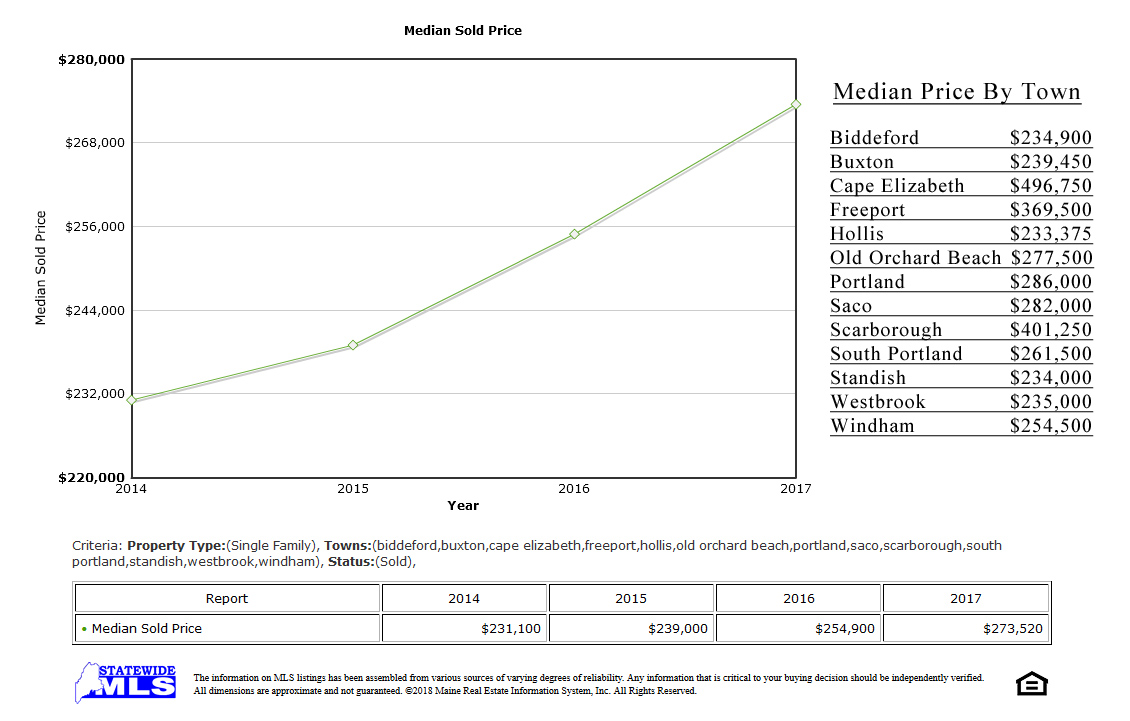
2017 Media Sales Price
Maine Listings has released their annual figures for home sales in 2017. It was another great year for home prices! Statewide the median sale price was up 5.60% compared to 2016. Cumberland County median sale price was up 7.55% since last year and York county was up 7.82%. Home prices are well above the pre-recesion “peak!”

“Home values showed upward movement throughout 2017 with the statewide annual median sales price also reaching an historical high. The market momentum is in place for a terrific start to 2018.” – Maine Listings January Press Release

Keep in mind, these are median sale price numbers. To find out what your home is worth call today for a free market analysis.

Posted in Uncategorized

Getting Ready To Buy A Home?

Here are some helpful tips for getting ready to buy a home:

1. Check your credit score and report. You can obtain a free copy of your credit report once a year www.annualcreditreport.com

  • Keep in mind that different industries calculate your score differently, so the actual credit score when you apply for a loan may be a slightly number.
  • Generally you need a 640 credit score or better for most loan programs. They also look at the total amount of debt payments versus your income. Try to have any balances on your credit cards below 40% of the maximum available.
  • 2. Collect tax returns, W2s for the past two years and paystubs for the past 1-2 months for proof of employment and income.

    3. If you are renting, pay by check so you have a record they can verify.

    4. Avoid large or unusual deposits or withdrawals from our bank account. If you are “borrowing” money from friends or family, be aware that the lender won’t allow you to “borrow” money and they will require it to be a gift with no expectation of repayment.

    5. Talk to a few different loan officers at different companies so you can compare the closing fees and loan programs available. Some local banks have in-house programs that are more flexible with down payment then the loan programs that are resold to investors. However, independent mortgage brokers often have access to a larger variety of programs then local banks do. It’s a good idea to talk with someone from both. Multiple loan officers can check your credit without additional adverse effect as long as it is within a 30 day period. We can direct you to some loan officers we’ve had good experiences with.

    Posted in For Buyers

    Should I Wait Until Spring To Sell?

    “What is the best time of year to list my house for sale?”
    This is a question we Realtors have heard many times. The short answer is that you can list your house any time of year, but spring and summer are the strongest markets. The longer answer gets to the well-known principle of supply and demand.

  • If there are fewer houses for sale during the fall, this can work to your advantage in selling your house.
  • There are also buyers who are under contract to sell their house soon and are buy right now. These buyers may no longer be looking by the time next spring comes around.
  • If you are looking to sell your house and buy another house immediately, doing so in the fall could help you avoid a blind bidding war with other buyers. It can be very frustrating to bid above asking price on house after house and keep losing out to someone else. This is an unfortunately common problem in the spring market especially with the low inventory we have had in our area over the past few years.
  • Nobody wants to move during a blizzard in February, so act now and at contact us for a free market analysis of your house and we can discuss further a marketing plan and the time of year that makes the most send for you.

    Posted in For Sellers